


DramaOL
fredom lemedy
I approached DramaOL as a casual entertainment app built around short-form drama viewing, and its central promise is easy to understand: open the app, choose an episode, and keep watching without paying for each episode. The store summary also presents a second attraction, saying viewers can get paid, which makes the service more unusual than a normal streaming catalog. My overall impression is that DramaOL is aimed at people who enjoy quick dramatic stories and want a simple way to fill spare moments rather than manage a large, traditional television library.
The app is free to install and is listed for Everyone, so it has a broad starting audience. It comes from fredom lemedy and sits in the Entertainment category. With a 4.8 average from around 37 thousand ratings and over one million installs, it has clearly attracted substantial interest. Those figures do not replace personal testing, but they do tell me that DramaOL is not an obscure experiment with no audience behind it.
How DramaOL feels during everyday viewing
Speed expectations before you start watching
DramaOL’s appeal depends heavily on how quickly it gets me from opening the app to an actual story. This is not the kind of entertainment I would choose when I want to spend several minutes organizing a watchlist. Its value is greatest when the viewing path feels direct: launch it, find a drama, and continue with the episode. That makes it a natural fit for a lunch break, a commute with a reliable connection, or a few minutes before bed.
I would not judge its speed only by the opening screen. For a drama app, the more important moments are the transition into playback, the move from one episode to the next, and the return to a story after leaving the app. A fast interface is helpful, but smooth recovery matters just as much. If I pause a story to answer a message, I want to spend my time watching rather than searching for the same episode again.
Because DramaOL is built around watching episodes, connection quality will influence the experience more than it would in a simple reading or utility app. On a strong connection, the sensible expectation is a straightforward viewing session. On a weaker one, patience becomes part of the experience. I would open the app before a planned viewing break rather than wait until the exact last minute, especially if I am relying on mobile data.
Related News

Why WhatsApp Messenger Still Makes Everyday Communication Feel Easy

Jurassic World: The Game Is the Better Dino Tycoon for Strategic Players

Threads in Real Life: Who Should Join, Lurk, or Leave

How SHEIN Turned Shopping Into an Endless Content Feed

How to Make Fortnite Feel Smarter on Mobile

Should You Switch to Microsoft Outlook on Mobile?
The free model is another part of the speed question. Free entertainment services often ask the viewer to accept interruptions or additional steps, and DramaOL’s store summary makes the no-cost access central to its identity. I would therefore treat each viewing session as a balance between convenience and whatever in-app prompts appear along the way. That is not automatically a problem, but it means the app is better for flexible leisure than for uninterrupted, cinema-style viewing.
What happens during heavier use
DramaOL should be easiest to evaluate during a short session, but longer viewing exposes the details that matter. Watching several episodes in one sitting places more pressure on playback continuity, navigation, and the phone itself. I would pay attention to whether moving between episodes remains clear, whether the app returns to the right place after an interruption, and whether the device begins to feel unusually warm or sluggish.
I am deliberately cautious about making hard performance claims here. The available product information identifies the app, its version, and its operating-system requirement, but it does not provide device-by-device measurements for loading time, battery use, memory consumption, or playback stability. Those results can vary greatly between an older phone, a modern mid-range handset, and a high-end device. My practical advice is to test one complete viewing session on your own phone before committing to long binge sessions.
Gallery
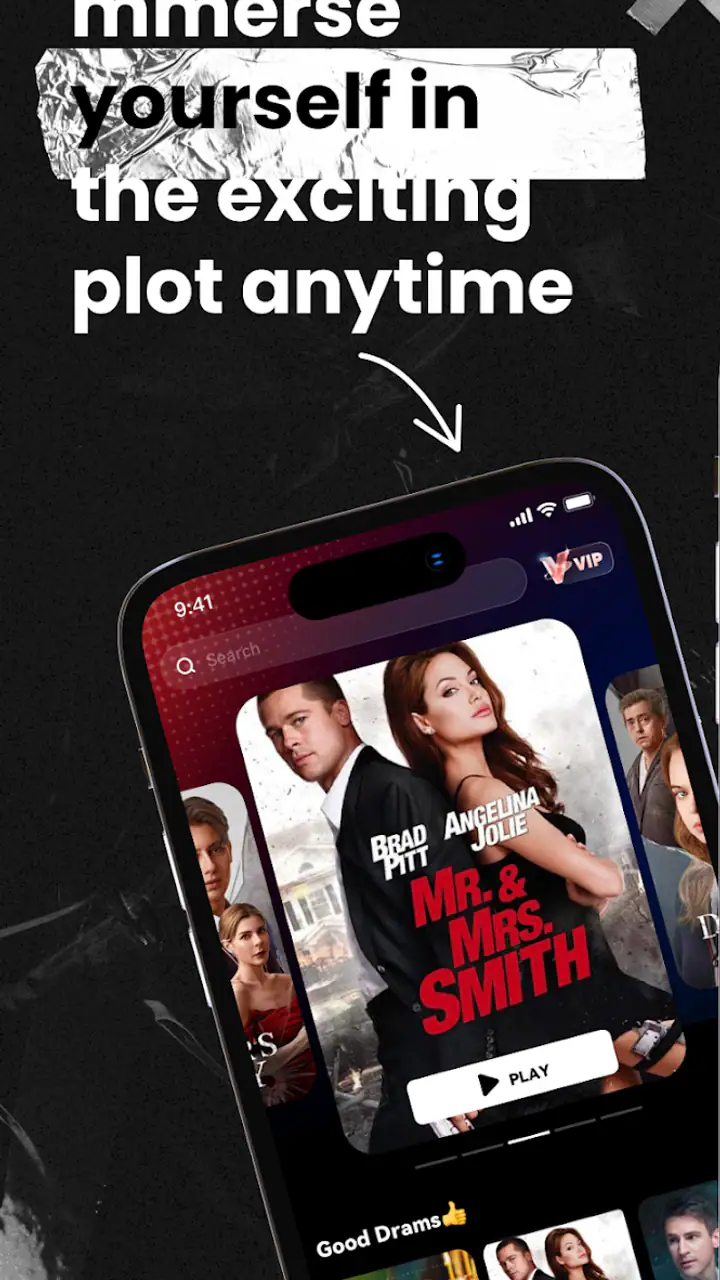
A useful habit is to close unrelated video or game apps before starting DramaOL. This is not because I can assign a precise memory footprint to it, but because video playback generally benefits from giving the phone fewer competing tasks. If the app feels slow after a long session, restarting it is a more sensible first step than repeatedly tapping the same control. That simple recovery routine can prevent a temporary issue from becoming a frustrating loop.
Heavy use also changes how I view the “get paid” part of the proposition. Anyone attracted by that wording should read the in-app conditions carefully and distinguish entertainment access from any activity connected with rewards. I would never assume that watching automatically produces a predictable income. Treat it as a possible extra described by the service, not as a substitute for work or a guaranteed return.
Reliability and recovering from interruptions
Reliability is especially important for an episode-based app because a small interruption can break the emotional rhythm of a story. A useful service should make it reasonably easy to resume after a phone call, a notification, or an accidental exit. When I use DramaOL, I would make a point of noting the episode title and position if I am stopping in the middle of a dramatic scene. That sounds old-fashioned, but it is a practical safeguard for any app whose resume behavior may differ from one device to another.
The current version is 1.0.6, which gives users a specific version to identify when troubleshooting. If something behaves strangely, checking that the installed build is current is a sensible first move. I would also force-close and reopen the app before assuming the problem is permanent. For playback issues, switching between a stable Wi-Fi connection and mobile data can help identify whether the difficulty is related to the network rather than the application itself.
There is a meaningful difference between a brief loading delay and a failure that repeatedly loses viewing progress. The first may be tolerable in a free entertainment app; the second changes whether I would recommend it for serious binge watching. I would be comfortable trying DramaOL for casual episodes, but I would keep another entertainment option available if I were planning a long trip or an evening where interruptions would be particularly annoying.
Another recovery question is whether the app remains useful when the viewer has limited connectivity. The product information emphasizes watching episodes, but it does not establish an offline-download workflow. I would therefore plan to watch while connected rather than assume I can prepare a library in advance. That single expectation prevents one of the most common disappointments: discovering at the airport, on a train, or in a basement that a streaming-focused app cannot serve the intended session.
Device constraints and who should use it
DramaOL supports Android 7.0 and later, which keeps its technical entry point relatively accessible for people who do not own a recent phone. Still, operating-system compatibility is only the first filter. Available storage, network quality, screen size, battery condition, and background activity can all affect how pleasant video entertainment feels. An older compatible phone may open the app successfully yet provide a less comfortable long-session experience than a newer device.
On a small screen, short episodes can be easier to tolerate than long-form television because the commitment feels lighter. That makes DramaOL appealing for viewers who watch in fragments rather than settle in for a full movie. However, people who care about a large-screen experience, advanced playback controls, or carefully organized collections may prefer a conventional streaming service designed around those priorities.
The Everyone age rating makes the app broadly approachable, but I would still judge individual dramas rather than relying only on the platform-level label. The tone, themes, and emotional intensity of a particular story can vary. Parents choosing entertainment for children should preview the material themselves and use their own judgment, especially if a child will be watching without supervision.
Storage planning is also worth considering. Even when an app itself is not unusually demanding, repeated video viewing can encourage a user to keep several entertainment apps installed and leave less room for photos or other media. I would review storage if the phone is already close to full. A little housekeeping can improve general device responsiveness and makes it easier to distinguish an app problem from a phone that is simply running out of space.
Where it fits beside ordinary streaming alternatives
DramaOL is not trying to solve exactly the same problem as a broad subscription streaming platform. A conventional service may be better for people who want major films, established television catalogs, profiles for several household members, polished cross-device continuity, and predictable subscription terms. DramaOL is more attractive to someone whose priority is discovering compact dramatic stories without paying an upfront subscription.
It also differs from free video platforms built around user uploads. Those services usually offer a huge variety of topics, while DramaOL’s identity is more focused on drama viewing. That focus can be an advantage when I already know the mood I want. I do not have to wade through unrelated tutorials, music clips, or news to find a story. The trade-off is that a narrower entertainment purpose may feel limiting when I want comedy, documentaries, live content, or a familiar mainstream series.
The in-app purchase range runs from $7.99 to $29.99 per item, so “free” should not be read as meaning that every part of the experience is necessarily free of optional purchases. I would inspect the wording around any purchase before confirming it, particularly if the app presents rewards, access, or viewing benefits together. For a casual viewer, the safest approach is to use the free path first and spend only when the value is clear and the terms are easy to understand.
This is also where the platform’s reward claim deserves a careful comparison with alternatives. A normal streaming service asks for money in exchange for access; DramaOL’s store summary suggests a model where viewers may get paid. That could be interesting for users willing to follow the app’s rules, but it introduces questions about eligibility, timing, and conditions that should be answered inside the service before anyone treats the feature as a reason to change their viewing habits.
Three practical ways to get more from it
My first tip is to use DramaOL as a planned micro-break rather than leaving it open indefinitely. Pick a story before the break begins, watch a manageable portion, and close the app when you are done. This reduces the chance of burning through battery or mobile data without noticing and makes the service fit naturally into daily routines. It is particularly useful for people who want entertainment but do not want another platform taking over an entire evening.
My second tip is to create a simple recovery routine for interrupted viewing. Before leaving an episode, note where you stopped if the app does not immediately make the position obvious. If playback fails, reopen the app once, check the connection, and then try again instead of repeatedly pressing play. This approach saves time and gives you a clearer idea of whether the issue is temporary, network-related, or tied to the current device.
My third tip concerns rewards and purchases: separate the entertainment decision from the money decision. First ask whether you enjoy the dramas without spending. Then examine exactly what an optional item provides and what action is required to receive any advertised reward. This two-step habit is more useful than assuming that a free download and a paid item belong to the same value proposition.
A fourth practical use is to test the app in the place where you expect to use it most. If that is a commute, test it on the same mobile connection. If it is bedtime viewing, check the experience with the phone’s usual battery level and background apps. Performance advice based on a perfect home network can be misleading, so a short real-world trial tells me more than a generic claim about speed.
Who will enjoy it, and who should skip it
I would recommend DramaOL to viewers who like dramatic stories in small, convenient sessions and who are curious about a free entertainment model with a reward angle. It is a good candidate for someone who wants to browse on a compatible Android phone, avoid an immediate subscription, and decide gradually whether the available content suits their taste.
I would be more hesitant to recommend it to a viewer who demands guaranteed offline access, a highly polished television-style ecosystem, or a completely predictable, interruption-free experience. Someone with limited mobile data should also be cautious about making it a regular habit without checking how viewing affects their plan. Likewise, users who dislike optional purchases or reward conditions may find the model more complicated than a straightforward paid service.
Families should approach it thoughtfully. The Everyone rating makes the app broadly suitable at the platform level, but it does not remove the need to consider the subject matter of individual dramas. For a child, I would choose content together rather than hand over the app as an unrestricted entertainment source.
My performance verdict after weighing the trade-offs
DramaOL’s strongest quality is its clear, low-commitment idea: drama viewing without an upfront price, combined with a claim that viewers may get paid. Its audience size and high average rating suggest that the concept has resonated with many users. The Android requirement also avoids excluding people with older compatible phones, while the Entertainment classification accurately reflects its purpose.
My reservation is not about the basic idea; it is about expectations. I would not treat the app as a replacement for every streaming service, nor would I assume that free access means frictionless viewing or guaranteed rewards. Connection quality, device condition, interruptions, and the details of optional purchases all matter. The best experience comes from using it casually, testing it on the device and network you actually have, and reading reward or purchase conditions before acting on them.
In the end, I see DramaOL as worth trying for short drama sessions, especially if you are curious about its unusual free-and-reward-oriented approach. I would keep my recommendation measured: use the free experience first, watch how reliably it resumes, and decide whether its catalog and viewing flow fit your routine. If you want focused dramatic entertainment without immediately joining a traditional subscription, it has a convincing reason to earn a place on your phone. If your priority is premium consistency, deep catalog control, or offline certainty, a conventional streaming alternative will probably serve you better.
My bottom line: DramaOL is most appealing when convenience and experimentation matter more than a fully polished streaming ecosystem. I would recommend giving it a fair trial on a compatible device, while keeping spending, data use, and reward expectations firmly under your control.
FAQs for DramaOL
What is DramaOL and what can I watch on it?
DramaOL is a mobile entertainment app focused on serialized video content, including short dramas, romantic stories, family plots, and other episodic productions. After installing it, users can browse a catalog, open a title, and watch episodes from their phone or tablet. The available shows, languages, subtitles, and regional selection may change, so checking the current catalog before downloading is recommended.
Is DramaOL free to download and use?
DramaOL can generally be downloaded without an upfront installation charge, but free access does not necessarily mean that every episode or feature is completely free. Some content may be supported by advertisements, while selected episodes, early access, coins, or premium memberships may require payment. Before confirming a purchase, review the price, billing period, and subscription terms shown in the app.
Does DramaOL require an account or internet connection?
The app may allow users to explore some content without registering, but an account can be required for features such as saving viewing progress, synchronizing access across devices, receiving recommendations, or unlocking purchased content. A stable internet connection is normally needed for streaming. If offline downloads are offered, availability and viewing limits can depend on the title and the user’s account.
Is DramaOL available on both Android and iPhone?
DramaOL availability depends on the country, device, and operating-system version. Before downloading, users should search for the official listing in Google Play or the Apple App Store and confirm the developer name, ratings, permissions, and recent update information. If the app does not appear in an official store, avoid unofficial APK files or modified versions, since they can create security, privacy, and account risks.
Are there advertisements, in-app purchases, or privacy concerns in DramaOL?
Depending on the version and region, DramaOL may include advertising, optional purchases, virtual currency, or recurring subscriptions connected to the store account. The app can also request permissions related to account management, notifications, diagnostics, or personalized recommendations. We recommend reading its privacy policy and checking the permissions during setup. Disable unnecessary notifications and manage subscriptions through Google Play or Apple settings.
Pros
- Large selection of Asian dramas and entertainment content
- Episodes are generally easy to find through category browsing
- Supports subtitles for viewers watching international productions
- Regular content updates can keep the catalog feeling fresh
- Works well for casual viewing on compatible mobile devices
Cons
- Some titles or episodes may require a premium subscription
- Video quality and playback stability can vary by title
- Subtitle accuracy may differ between shows
- Availability of content can depend on your region
- The app may include ads during browsing or video playback


